
Speakers and Session Abstracts
_edi.jpg)

Session 1
Extracellular Vesicle Therapeutics:
Clinical Translation and Future Directions
Takahiro Ochiya, PhD
Session 2

Understanding Aging: Molecular Mechanisms and Opportunities for Intervention
Makoto Nakanishi, MD, PhD
Session 3
High-Dose Intravenous Vitamin C: Clinical Applications in Oncology and Beyond
Toru Mizoguchi, MD
Session 4
Glutathione Update 2027: Beyond IV Therapy—
Emerging Applications in Clinical Practice
Hiromichi Matsumura, MD
Session 5
Medicine Reimagined: A Vision for the Next Decade
Atsuo Yanagisawa, MD, PhD

Takahiro Ochiya, PhD
Project Professor, Division of Molecular and Cellular Therapy
Future Medicine Research Center, Institute of Medical Science
Tokyo Medical University

BIOGRAPHY
Takahiro Ochiya, PhD, is a Project Professor at the Future Medicine Research Center, Institute of Medical Science, Tokyo Medical University. He earned his PhD from Osaka University and spent more than two decades at the National Cancer Center Research Institute, where he led research in molecular oncology, cancer metastasis, and molecular and cellular medicine. His current research focuses on extracellular vesicles, including exosomes, and their roles in intercellular communication, cancer progression, liquid biopsy, and therapeutic development. Dr. Ochiya has also contributed to the development of guidance for the safe clinical application of extracellular vesicles in Japan. He serves as President of the Japanese Society for Extracellular Vesicles and has been recognized as a Clarivate Highly Cited Researcher for seven consecutive years beginning in 2019.
CAREER HISTORY
1988 Completed the doctoral program at Osaka University and earned a PhD in medical science. 1988 Research Assistant, Center for Cell Engineering, Osaka University. 1991 Postdoctoral Fellow, La Jolla Cancer Research Foundation, now Sanford Burnham Prebys, California, USA. 1992 Senior Researcher, Division of Molecular Oncology, National Cancer Center Research Institute. 1993 Head, Laboratory of Cellular Genetics, Division of Molecular Oncology, National Cancer Center Research Institute. 1998 Head, Independent Laboratory for Cancer Metastasis Research, National Cancer Center Research Institute. 2010 Chief, Division of Molecular and Cellular Medicine, National Cancer Center Research Institute. 2018 Professor, Division of Molecular and Cellular Therapy, Institute of Medical Science, Tokyo Medical University. 2023 Project Professor, Division of Molecular and Cellular Therapy, Future Medicine Research Center, Institute of Medical Science, Tokyo Medical University.
HONORS AND RECOGNITION
2019–2025
Recognized as a Clarivate Highly Cited Researcher for seven consecutive years.
Extracellular Vesicle Therapeutics:
Clinical Translation and Future Directions
SESSION TITLE
SESSION ABSTRACT
Research on extracellular vesicles (EVs), including exosomes, has advanced rapidly in recent years, accelerating clinical development in both diagnostics and therapeutics. EV-based therapeutics, in particular, are now the focus of intense global research and development. In Japan, clinical translation is also beginning to advance, as illustrated by the launch in February 2026 of a clinical study evaluating an EV preparation for knee osteoarthritis.
At the same time, significant challenges remain, including manufacturing consistency, quality control, safety evaluation, and the development of appropriate regulatory frameworks.
This session will review recent advances in EV research and the global development landscape, examine the current status and key challenges of EV-based therapeutics, and discuss their potential as an emerging therapeutic modality.
Makoto Nakanishi, MD, PhD
Project Professor, Division of Cancer Cell Biology
The Institute of Medical Science
The University of Tokyo
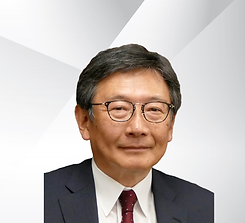
BIOGRAPHY
Makoto Nakanishi, MD, PhD, is a Project Professor in the Division of Cancer Cell Biology at the Institute of Medical Science, The University of Tokyo. He previously served as Dean of the Institute from 2023 to 2025, following four years as Vice Dean. After earning his medical and doctoral degrees from Nagoya City University, he held research and faculty positions at Jichi Medical University, Baylor College of Medicine, the National Center for Geriatrics and Gerontology, and Nagoya City University. His research focuses on cellular senescence and its roles in cancer, chronic inflammation, and age-related disease. His laboratory seeks to identify and characterize senescent cells in vivo and develop senotherapies that regulate or eliminate them. He also holds a project professorship at the Nagoya Advanced Research and Development Center, Nagoya City University.
CAREER HISTORY
1985 Graduated from Nagoya City University School of Medicine. 1989 Completed the doctoral program at the Graduate School of Medical Sciences, Nagoya City University, and earned a PhD in medical science. 1989 Research Associate, Department of Biochemistry, Jichi Medical University School of Medicine. 1992 Lecturer, Department of Biochemistry, Jichi Medical University School of Medicine. 1993–1995 Research Associate, Division of Molecular Virology, Baylor College of Medicine, USA. 1997 Head, Geriatric Research Laboratory, National Center for Geriatrics and Gerontology. 1998 Associate Professor, Nagoya City University School of Medicine. 2000 Professor, Nagoya City University School of Medicine. 2016 Professor, Division of Cancer Cell Biology, The Institute of Medical Science, The University of Tokyo. 2019–2023 Vice Dean, The Institute of Medical Science, The University of Tokyo. 2023–2025 Dean, The Institute of Medical Science, The University of Tokyo. 2026 Project Professor, Division of Cancer Cell Biology, The Institute of Medical Science, The University of Tokyo. 2026 Project Professor, Department of Biology of Aging, Nagoya Advanced Research and Development Center, Nagoya City University.
SESSION TITLE
Understanding Aging:
Molecular Mechanisms and Opportunities for Intervention
SESSION ABSTRACT
Despite remarkable advances in science and technology, the biological mechanisms underlying aging remain incompletely understood.
Aging is one of the most significant risk factors for a wide range of diseases, including cancer. A better understanding of the aging process—and the ability to target its underlying biological mechanisms—could lead to new approaches for preventing or delaying many age-related conditions. In this sense, intervention in the biology of aging may represent one of the most comprehensive forms of preventive medicine.
This session will review the current understanding of the molecular mechanisms of aging, with particular attention to cellular senescence and its contribution to age-related disease. It will also explore whether aspects of biological aging can be prevented, delayed, modified, or potentially reversed.

Director, Mizoguchi Clinic
Medical Corporation Kaiseikai
Board Member, Japanese College of Intravenous Therapy
Toru Mizoguchi, MD
BIOGRAPHY
Toru Mizoguchi, MD, is Director of Mizoguchi Clinic, Representative Director of the Orthomolecular Nutrition Laboratory, and a Board Member of the Japanese College of Intravenous Therapy. After graduating from Fukushima Medical University, he trained in anesthesiology and cardiovascular anesthesia at Yokohama City University Hospital and the National Cardiovascular Center. He began incorporating orthomolecular nutritional approaches into clinical practice in 2000 and opened Shinjuku Mizoguchi Clinic, Japan’s first clinic specializing in orthomolecular medicine, in 2003. The clinic relocated to Tokyo’s Yaesu district and reopened as Mizoguchi Clinic in 2021. In addition to treating patients, Dr. Mizoguchi is actively involved in educating physicians, healthcare professionals, and the public about orthomolecular nutrition. He was inducted into the International Society for Orthomolecular Medicine Hall of Fame in 2018.
CAREER HISTORY
1990 Graduated from Fukushima Medical University School of Medicine. 1994 Resident, National Cardiovascular Center. 1995 Research Associate, Department of Anesthesiology, Yokohama City University School of Medicine. 2003 Established Shinjuku Mizoguchi Clinic. 2014 Established the Orthomolecular Nutrition Laboratory and became its Representative Director. 2021 Relocated Shinjuku Mizoguchi Clinic to Tokyo’s Yaesu district and reopened it as Mizoguchi Clinic.
SELECTED BOOKS
2001
Remarkable Nutritional Therapies Selected by a Physician (Bungeisha)
2003
The Latest Nutritional Science for Primary Care Physicians (Nanzando), editor
2009
Depression Was Caused by Food (Seishun Publishing)
2018
The Most Powerful Nutritional Therapy: An Introduction to Orthomolecular Medicine (Kobunsha)
SELECTED TRANSLATIONS
2016
Encyclopedia of Nutrition and Diet Therapy (Gaia Books)
2017
Foods That Heal and Foods That Harm: A Guide by Ingredient and Condition (Reader’s Digest)
HONORS AND AWARDS
2018
Inducted into the International Society for Orthomolecular Medicine Hall of Fame.
SESSION TITLE
High-Dose Intravenous Vitamin C:
Clinical Applications in Oncology and Beyond
SESSION ABSTRACT
Interest in high-dose intravenous vitamin C therapy in Japan grew following the publication of Atsuo Yanagisawa’s 2007 book, Vitamin C Kills Cancer Cells. High-dose intravenous vitamin C, or IVC, has since been incorporated into cancer care at medical institutions across Japan.
A central principle of orthomolecular medicine is that the tissues and organs with the greatest demand for a nutrient are among the first to be affected by its deficiency. In the case of vitamin C, these may include the adrenal glands, white blood cells, brain, and skin.
This session will examine the clinical use of IVC not only in cancer care but also in conditions affecting tissues and organs with high vitamin C requirements. Dr. Mizoguchi will also share practical approaches to incorporating orthomolecular nutritional therapy into clinical practice.
Director, Kamakura Genki Clinic
Vice President, Japanese College of Intravenous Therapy
President, Japanese Society for Medical and Environmental Ozone Therapy

Hiromichi Matsumura, MD
BIOGRAPHY
Hiromichi Matsumura, MD, is Director of Kamakura Genki Clinic and Vice President of the Japanese College of Intravenous Therapy. He graduated from Nippon Medical School in 1993 and trained in anesthesiology, pain medicine, and psychiatry at Nippon Medical School Hospital, Kanto Teishin Hospital, now NTT Medical Center Tokyo, and Seishinkai Ujiie Hospital. Since becoming Director of Kamakura Genki Clinic in 2017, he has provided integrative care drawing on pain medicine, psychiatry, traditional East Asian medicine, balneotherapy, orthomolecular medicine, and complementary approaches, with particular emphasis on stress management and preventive medicine. Dr. Matsumura also serves as President of the Japanese Society for Medical and Environmental Ozone Therapy and chairs its Clinical Research Division. He is a member of the International Scientific Committee of Ozonetherapy.
CAREER HISTORY
1993 Graduated from Nippon Medical School and began training in the Department of Anesthesiology at Nippon Medical School Hospital. Subsequent clinical appointments Worked in the Pain Clinic Department at Kanto Teishin Hospital, now NTT Medical Center Tokyo, and in the Departments of Anesthesiology and Psychiatry at Seishinkai Ujiie Hospital. 2017 Appointed Director of SPIC Clinic, now Kamakura Genki Clinic. 2026 Appointed President of the Japanese Society for Medical and Environmental Ozone Therapy.
QUALIFICATIONS AND PROFESSIONAL APPOINTMENTS
-
Board-Certified Pain Specialist, Japan Society of Pain Clinicians
-
Certified Occupational Physician, Japan Medical Association
-
Certified Balneotherapy Physician, Japanese Society of Balneology, Climatology and Physical Medicine
-
Vice President, Japanese College of Intravenous Therapy
-
President and Chair of the Clinical Research Division, Japanese Society for Medical and Environmental Ozone Therapy
-
Board Member, Japanese Society for Orthomolecular Medicine
-
Member, International Scientific Committee of Ozonetherapy
-
Advisor, Mental Wellness Training Association
SELECTED BOOKS
A Medical Approach to Resolving 90% of Interpersonal Frustration (Mynavi Shinsho)
Preventing Illness Through the Brain–Gut Axis (Shichisei Publishing)
SESSION TITLE
Glutathione Update 2027:
Beyond IV Therapy—Emerging Applications in Clinical Practice
SESSION ABSTRACT
Glutathione is widely used in intravenous therapy and is familiar to many clinicians through the College’s introductory training programs. In recent years, however, it has become increasingly clear that glutathione is more than a conventional antioxidant. It is a central regulator of cellular redox homeostasis, with effects that vary according to the biological and clinical context.
This session will review the practical use of intravenous glutathione and key considerations for its introduction into clinical practice. It will also examine its applications in aesthetic medicine, its complex and context-dependent roles in oncology, recent findings related to neurodegenerative diseases, and the emerging concept of reductive stress. Drawing on current research and clinical experience, Dr. Matsumura will provide an updated and clinically relevant overview of glutathione and its evolving applications.
Atsuo Yanagisawa, MD, PhD
President, Japanese College of Intravenous Therapy
President, Japanese Society for Orthomolecular Medicine
Honorary Director, Kamakura Genki Clinic

BIOGRAPHY
Atsuo Yanagisawa, MD, PhD, is President of the Japanese College of Intravenous Therapy and the Japanese Society for Orthomolecular Medicine, and Honorary Director of Kamakura Genki Clinic. He graduated from Kyorin University School of Medicine in 1976 and earned his PhD there in 1980. After conducting research at Jefferson Medical College in the United States, he served as Associate Professor of Internal Medicine and later Professor of Emergency Medical Science at Kyorin University. Since 2008, he has served as Director of the International Center for Integrative Medicine Education. A pioneer in intravenous and orthomolecular medicine in Japan, Dr. Yanagisawa served as President of the International Society for Orthomolecular Medicine from 2012 to 2023 and was inducted into its Hall of Fame in 2011. He holds the Certified Chelation Therapy credential from the American College for Advancement in Medicine and is a Fellow of the American College of Cardiology.
CAREER HISTORY
1976 Graduated from Kyorin University School of Medicine. 1980 Completed the doctoral program at Kyorin University Graduate School of Medicine and earned a PhD in medical science. 1985 Research Fellow, Jefferson Medical College, USA. 1995 Associate Professor, Department of Internal Medicine, Kyorin University School of Medicine. 2000–2008 Professor, Department of Emergency Medical Science, School of Health Sciences, Kyorin University. 2004 Established SPIC Salon Medical Clinic in Kamakura, now Kamakura Genki Clinic. 2007 Founded the organization now known as the Japanese College of Intravenous Therapy and became its President. 2008 Appointed Director of the International Center for Integrative Medicine Education. 2009 President, 10th International Congress of Integrative Medicine. 2011 Inducted into the International Society for Orthomolecular Medicine Hall of Fame. 2012–2023 President, International Society for Orthomolecular Medicine. 2017 Appointed President of the Japanese Society for Orthomolecular Medicine. 2018 Congress President, 47th International Congress of Orthomolecular Medicine in Tokyo. 2019 Congress President, First Annual Meeting of the Japanese Society for Orthomolecular Medicine. 2020 Member, Scientific Advisory Board of Vitamin C for COVID. 2021 Honorary Member, Philippine Society for Orthomolecular Medicine. 2024 Appointed Representative Director of Guardians for Health and Freedom.
HONORS AND AWARDS
2014
Received the Antoine Béchamp Award in France, the Pearl Maker Award in the United States, and an Outstanding Academician Award at the World Congress of Neural Therapy in Ecuador.
PROFESSIONAL CREDENTIALS
-
Certified Chelation Therapy (CCT), American College for Advancement in Medicine
-
Fellow of the American College of Cardiology (FACC)
SELECTED BOOKS
-
Vitamin C Kills Cancer Cells (Kadokawa SSC)
-
Treating Parkinson’s Disease with Intravenous Glutathione Therapy (GB)
-
Pain-Free Cancer Treatment with High-Dose Intravenous Vitamin C (GB)
-
Anti-Aging Through Innovative Intravenous Therapy (Shufu no Tomo)
-
Overcoming COVID-19 with Vitamins C, D, and Zinc (Shufu no Tomo)
-
Several of Dr. Yanagisawa’s books have also been translated and published internationally.
SESSION TITLE
Medicine Reimagined: A Vision for the Next Decade
SESSION ABSTRACT
Over the past 20 years, the Japanese College of Intravenous Therapy has explored new possibilities in medicine by advancing nutritional medicine, intravenous therapy, and integrative medicine.
This session will reflect on the College’s evolving vision—from “New Age Medicine” to “Liberal Medicine,” a concept that seeks to move beyond conventional disciplinary and therapeutic boundaries. Against the backdrop of advances in artificial intelligence, personalized medicine, preventive medicine, mitochondrial medicine, environmental medicine, and drug repurposing, Dr. Yanagisawa will consider how medicine may evolve over the coming decade.
Beyond treating disease, medicine can also support health, function, resilience, and quality of life. This session will present a forward-looking vision for reimagining medicine and healthcare in the decade ahead.